The Initial Hope: Kennedy’s Challenge to the Status Quo
Robert F. Kennedy Jr.’s foray into the political arena has brought forth a mixture of hope, excitement, and skepticism regarding American democracy and the traditional party structures within it. His journey began with a notable challenge to Joe Biden, which many saw as an essential endeavor to illuminate the direction of the Democratic Party. The anticipation was palpable; a primary challenge could potentially lead to a significant re-evaluation of party values and priorities. Yet, expectations of a vigorous intra-party debate were tempered by disillusionment as Kennedy expressed his dissatisfaction with the party’s openness to genuine competition. Following his departure from the Democratic Party, Kennedy declared his intention to run as an independent candidate, a move reflecting a broader restlessness among American voters yearning for alternatives to the prevailing two-party system—often characterized as a duopoly.
The very essence of Kennedy’s campaign resonated with a segment of the electorate that is increasingly frustrated with the status quo. Initial polling suggested he could capture between 10 to 15 percent of the popular vote, a noteworthy achievement for an independent candidate navigating a challenging political landscape. This level of support implies that numerous Americans are receptive to shifting away from the traditional candidates associated with the Democrats and Republicans. However, despite these promising signs, systemic barriers exist that could stifle Kennedy’s viability. These impediments include limited media access, restrictive debate inclusion, and a lack of recognition by large segments of the political establishment.
Financial backing played a crucial role in shaping Kennedy’s independent campaign. Prominent figures from Silicon Valley have shown their support for independent candidacies, reflecting a desire among some members of the tech elite for a more diverse political landscape. Nicole Shanahan, an accomplished attorney and the former wife of Google co-founder Sergey Brin, emerged as Kennedy’s running mate. Shanahan’s involvement has not only brought financial resources to the campaign but has also added a layer of legal expertise crucial for countering efforts by the Democratic Party to limit Kennedy’s ballot access across various states. The financial resources allocated to legal battles highlight the challenges independent candidates face in their quest to gain a foothold against well-established political entities.
Despite his family legacy, which imbues his campaign with immediate name recognition, Kennedy has encountered significant challenges in establishing himself as a serious contender within the independent sphere. His positions on critical issues, comprising environmentalism and vaccine skepticism, reflect a blend of traditional liberal and right-wing ideologies that may appeal to a broad constituency. Yet, the entrenched nature of American politics often renders independent voices marginal, making the quest for electoral validation an uphill battle.
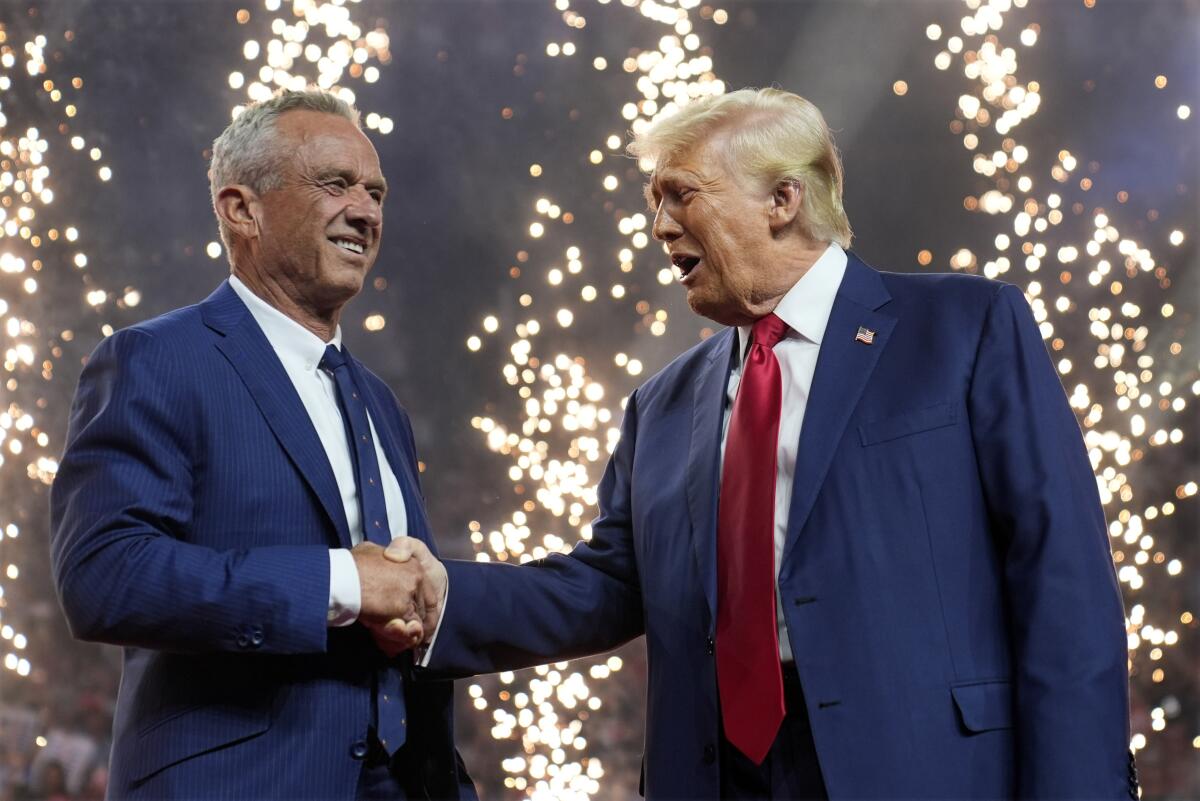
In a surprising turn, Kennedy recently announced his decision to withdraw from the independent race and endorse Donald Trump, which has ignited further conversations about the political landscape in America. This endorsement is not without its complexities. While Kennedy has been open about his pursuit of shared goals with Trump—such as a commitment to end perpetual wars, combat corporate influence, and protect free speech—the implications of this alignment have raised eyebrows across the political spectrum. Shanahan’s hesitance to endorse Trump unless he acknowledges the ramifications of Operation Warp Speed, particularly in terms of vaccine distribution, adds another layer of nuance to this endorsement scenario.
The narrative surrounding Kennedy’s endorsement mirrors a growing sense of disillusionment with the Democratic Party among some factions of the electorate. He has vocally criticized the party, accusing it of adopting anti-democratic practices that silence dissenting voices and compromise electoral integrity. Kennedy has articulated a perspective where he perceives a greater alignment with Trump on core issues, thereby signaling a significant ideological shift. Once firmly situated within the left’s ideological boundary, his evolving stances suggest intersections with certain right-wing viewpoints that may challenge traditional categorizations of political alignment.
Delving deeper into Kennedy’s critique, he has expressed concerns over the Democratic Party’s historical actions regarding electoral fairness. His reflections on the DNC’s maneuverings during the 2016 primary, where Hillary Clinton notably overcame Bernie Sanders amidst claims of unfair practices, highlight a long-standing frustration among many voters. Moreover, he emphasized more recent events where the DNC seemingly sought to present Joe Biden as the nominee with little regard for opposed voices. This commentary situates Kennedy within a narrative that portrays the Democratic establishment as increasingly disconnected from grassroots sentiments and the foundational principles of democratic engagement.
Amidst this landscape, Kennedy’s perspective resonates with a growing disillusionment toward elite political practices that prioritize party power over electoral democracy. By aligning himself with Trump, he not only creates distance from the current Democratic landscape but also challenges the traditional left versus right dynamics. This alignment is illustrative of shared frustrations revolving around elite control over the voter’s choice. As Kennedy expresses dissatisfaction with the Democratic establishment’s unwillingness to entertain genuine debate and transparency in candidate selection processes, he taps into broader public sentiments that call for a reexamination of the political status quo.
Furthermore, Kennedy has drawn attention to the pervasive sentiment that the Democratic Party, over the years, has veered away from its pledged commitment to democracy. His assertion that the party’s actions resemble tactics aimed more at maintaining elite power than empowering the electorate suggests a call to action among disaffected voters. His experience within the party apparatus substantiates these claims, indicating an environment where genuine electoral competition is stifled in favor of protecting entrenched interests.
Through his political journey, Kennedy raises significant questions regarding the ideological affiliations of voters following his shift away from the Democratic Party. A notable aspect of his endorsement of Trump is the potential to attract a diverse base of individuals who may feel alienated by traditional party lines. The current political climate, shaped by disillusionment and a yearning for genuine alternatives, may allow for a rethinking of how voters identify themselves politically, especially as the 2024 elections loom closer.
The influences of Kennedy’s recent decisions—a withdrawal from independent candidacy and a pivot towards Trump—add complexity to the existing political discourse. In doing so, he shines a light on the interplay between personal beliefs, party dynamics, and voter sentiments, illustrating a fluid political landscape that transcends simplistic categorizations. Acknowledging the variability of voter ideals, Kennedy’s narrative uncovers avenues for shifting political alliances and behaviors, painting a picture of an electorate that is navigating a tumultuous political landscape seeking authentic representation.
The Struggles of Running as an Independent
The landscape of American political candidacy showcases a spectrum of experiences encountered by independent candidates, with Robert F. Kennedy Jr.’s recent pursuits highlighting the systemic barriers that make running outside the established party framework an arduous endeavor. As Kennedy’s journey unfolds, it becomes apparent that the independent candidacy, while appealing to a significant portion of the electorate desiring alternatives, is frequently hampered by institutional challenges, including ballot access restrictions, limited media coverage, and insufficient debate platforms. This blog section delves into the barriers these candidates face, such as the obstacles Kennedy encountered and the broader implications these struggles may hold for the American democratic process.
The Systemic Barriers Facing Independent Candidates
The American political system has been criticized for its pronounced two-party structure, often referred to as a duopoly. This configuration substantially complicates the paths for those attempting to run as independent candidates. Research indicates that about 43% of Americans express a desire for alternatives to the traditional Democratic and Republican candidates, yet systemic barriers persistently undermine their chances of success.
To illustrate this, data collected from various elections indicate how few independent candidates ever receive considerable support in terms of campaign resources:
| Election Year | Independent Candidate | Vote Percentage |
|---|---|---|
| 2016 | Gary Johnson | 3.28% |
| 2020 | Jo Jorgensen | 1.2% |
| 2024 (Projected) | Robert F. Kennedy Jr. | 10-15% (Initial Polls) |
As this table demonstrates, achieving significant electoral showings as an independent candidate remains a formidable challenge.
Barriers include stringent ballot access laws that often require independent candidates to gather an excessive number of signatures to qualify for the ballot. For instance, in some states, this number can exceed tens of thousands, a considerable undertaking that necessitates substantial organizational and financial resources. Kennedy’s experience exemplified these challenges as he faced legal battles to ensure his participation amid attempts by the Democratic Party to restrict his candidacy.
Kennedy’s Experiences with Legal Battles and Ballot Access
Robert F. Kennedy Jr.’s entry into the race was initially framed by anticipation, particularly related to an intra-party challenge to the sitting president, Joe Biden. However, upon realizing the Democratic Party’s unwelcoming disposition to his primary campaign aspirations, Kennedy ultimately pivoted to an independent run. His endorsement of Donald Trump further complicates perceptions of his candidacy and underscores the tensions intrinsic to independent campaigns.
In attempting to secure ballot access, Kennedy’s campaign faced hurdles reminiscent of those encountered by other independent candidates. The Democratic National Committee (DNC) was perceived to actively work against Kennedy’s campaign, evidenced through its attempts to keep him off the ballot in various states. These legal battles drew considerable attention, especially as they spotlighted the Democratic Party’s broader trend towards anti-democratic maneuvers aimed at silencing dissent.
Amidst these challenges, Kennedy’s choice of a vice-presidential running mate, Nicole Shanahan, was not merely a strategic partnership; rather, it brought additional legal expertise and resources to navigate the complexities surrounding ballot access and campaign legitimacy. Shanahan’s background as an attorney, coupled with her previous affiliations with prominent tech figures, invested considerable funds into legal defenses against the DNC’s actions. This financial backing was instrumental in the campaign’s ability to challenge the restrictions imposed by traditional party dynamics.
Despite these advantages of name recognition rooted in his family legacy and notable support, Kennedy found his efforts constrained by a broader political landscape resistant to third-party candidates. His unique blend of viewpoints, straddling both left and right ideologies on key issues like environmental policies and vaccine discourse, did not despite public interest translate into robust support.
The Role of Media in Shaping Perceptions of Third-Party Candidates
The media’s role in the American political narrative cannot be understated, especially concerning how it influences public perceptions of candidates. For independent figures like Kennedy, the challenge becomes twofold: gaining visibility while navigating a media environment predominantly focused on the two-party candidates. This situation was starkly illustrated through the 2020 election cycle, where media coverage often sidelined independent candidates, framing them as fringe or less-likely alternatives, thereby reinforcing the duopoly.
Statistics regarding media coverage levels illustrate this phenomenon effectively:
| Candidate Type | Average Media Coverage (%) |
|---|---|
| Democratic Candidates | 70% |
| Republican Candidates | 25% |
| Independent Candidates | 5% |
This disparity underscores the media’s preference for established party candidates, contributing to the systemic challenges independent candidates face.
Moreover, media framing can significantly affect how voters perceive independent candidates, often labeling them in a context that diminishes their credibility or viability. Kennedy’s experiences reflect a broader narrative of disillusionment with traditional media outlets, which sometimes fail to provide fair representation of third-party candidates despite expressing a public appetite for alternative voices.
“The media plays a crucial role in shaping electoral narratives. It is important to recognize how independent candidates get marginalized in discussions dominated by party politics.” – Political Analyst
This framing extends to the coverage of Kennedy’s recent endorsement of Trump, a move that has drawn significant attention and scrutiny. Critics argue that such endorsements highlight a volatility in political affiliations among independent candidates, suggesting that underlying frustrations with the Democratic Party may align their views more closely with conservative elements, thus reshaping traditional voting behaviors.
Framing Kennedy’s Campaign in the Context of Political Discourse
As political dynamics continue to evolve, Kennedy’s journey serves as a case study reflecting broader discontent with the status quo. His candidacy and the eventual endorsement of Trump illustrate a shifting ideological landscape that transcends the restrictive binaries of traditional party politics. By aligning with Trump, Kennedy not only articulates a critique of the Democratic establishment but also taps into a burgeoning movement among independent and disenchanted voters seeking authentic representation, regardless of party affiliation.
The implications of Kennedy’s political maneuvers extend to a wider conversation about what independent candidacies signify in the current era. He has profoundly criticized the DNC for its practices, which he argues prioritize elite interests over genuine democratic engagement. His assertions resonate with voters feeling sidelined by mainstream parties, thus revealing a collective urgency for more representative political alternatives.
In summary, while Kennedy’s independent run initially appeared viable, systemic barriers have highlighted the complexities of operating outside the two-party system. Through a lens of legal challenges, media representation, and broader political implications, the landscape for independent candidates remains intricate and challenging. As Kennedy’s narrative unfolds, it raises essential questions regarding the future of independent political movements in an increasingly polarized environment.
The Unlikely Endorsement: From Independent to Trump
Robert F. Kennedy Jr.’s political trajectory has taken an unexpected turn, culminating in his endorsement of Donald Trump, which has ignited extensive debate regarding the current state of American democracy and the interplay of party politics. Initially, there was considerable hope associated with Kennedy’s challenge to President Joe Biden within the Democratic Party. His aim was to catalyze a primary contest that might clarify the party’s direction amidst growing concerns about its priorities and approach. However, disappointment ensued when Kennedy announced his decision to depart from the Democratic Party, describing it as inhospitable toward the type of primary he sought to instigate.
By choosing to run as an independent candidate, Kennedy tapped into a broader frustration felt by many Americans who are increasingly seeking alternatives to the entrenched two-party system, commonly referred to as the duopoly characterized by Republicans and Democrats. His early polling suggested potential support of 10 to 15 percent of the electorate, which is notably substantial for a candidate outside the two dominant parties. Nonetheless, the political landscape was not particularly favorable for independent candidates, given systemic barriers designed to limit their success, including restricted access to debates and inadequate media coverage.
Financial backing for Kennedy’s campaign originated from several tech billionaires in Silicon Valley, and his selection of Nicole Shanahan, a prominent lawyer and ex-wife of Google co-founder Sergey Brin, as his running mate provided additional momentum. Shanahan’s substantial investment into the campaign has been directed not only at traditional campaign expenditures but also toward legal battles against Democratic Party maneuvers aimed at pushing Kennedy off ballots in various jurisdictions. Beyond these advantages, Kennedy faced significant challenges which hindered his positioning as a credible independent contender, reflective of the deep-seated issues surrounding third-party participation.
As his campaign progressed, Kennedy made the contentious decision to abandon his independent candidacy in favor of endorsing Donald Trump. This shift prompted a reevaluation of political alliances within the electoral landscape. Shanahan, while supportive of Kennedy’s campaign, has shown reluctance to fully embrace Trump, pending his acknowledgment of his role in the COVID vaccine rollout via Operation Warp Speed—a program both Shanahan and Kennedy have criticized as detrimental.
The elements of Kennedy’s endorsement of Trump can be understood within the context of his growing disenchantment with the Democratic Party. In his announcement, he voiced concerns about the party’s perceived anti-democratic tendencies, opening a broader discussion regarding its governance style. Kennedy articulated shared understandings with Trump on several subjects, notably the quest to end endless military engagements, combat corporate dominance, and advocate for the preservation of free speech. This articulated understanding reflects a significant pivot in Kennedy’s political alignment, suggesting that his traditional left-leaning positions might now intersect with certain right-leaning viewpoints.
The discourse surrounding Kennedy also included pointed critiques aimed at the Democratic Party. He remarked upon numerous instances of perceived legal harassment against opposing voices, positioning these actions as symptomatic of a broader commitment to maintaining power among elite groups rather than genuinely serving the electorate’s interests. This framing of political dialogue implies a robust critique of the current state of democracy, where self-interest often overrides public accountability.
In contextualizing his own experiences, Kennedy recounted engagements with the Democratic National Committee (DNC), illustrating systemic faults he observed regarding electoral integrity. He referred to the contentious 2016 primary wherein it was alleged that the DNC favored Hillary Clinton over Bernie Sanders, illustrating his criticism of the lack of fairness in the party’s electoral practices. More recently, he noted an increasing trend within the Democratic establishment to impose candidates without substantial democratic opposition, thereby sidelining potential alternatives.
Kennedy’s narrative raises critical concerns about the underlying principles of transparency and accountability within the electoral process, particularly as it relates to candidate selection and voter engagement. Observing a seemingly declining commitment to democratic ideals within the Democratic Party has contributed to a growing sense of disillusionment, and his remarks reflected an urgency around reestablishing electoral fairness.
By publicly aligning himself with Trump, Kennedy has indeed distanced himself from mainstream Democratic ideologies, constructing a political narrative that resonates with a wider array of voters who feel disenfranchised. This alignment is emblematic of a broader anti-establishment sentiment evolving across the political landscape, challenging conventional perceptions of left versus right. With both Kennedy and Trump gaining notoriety for their respective critiques of elite political practices, this convergence produces important questions regarding voter alignment and the ideological landscapes of the upcoming electoral cycle.
As America approaches the crucial 2024 election cycle, Kennedy’s endorsement of Trump introduces a complex layer into political discourse, contributing to an evolving conversation surrounding voter identity, political affiliation, and the greater implications of candidacy beyond mere partisan lines. Will Kennedy’s shift influence voting behavior significantly? The influence of this decision remains uncertain, yet it undeniably enhances the complexity of contemporary political interactions within the United States.
In summary, Robert F. Kennedy Jr.’s endorsement of Donald Trump marks a significant, if surprising, development in the exploration of American political dynamics. By navigating away from the Democratic Party and aligning with a figure like Trump, Kennedy has prompted necessary conversations surrounding electoral integrity and party loyalty, challenging the conventional frameworks that often define American politics. The road ahead remains layered with possibilities and uncertainties as external perceptions and internal party dynamics continue to shift.
TL;DR: Robert F. Kennedy Jr. shifted from an independent campaign to endorsing Donald Trump, igniting discussions on electoral integrity and the changing dynamics within American politics. His criticisms of the Democratic Party’s practices reflect a broader disillusionment while indicating a potential reshaping of alliances as the 2024 elections approach.